Which parts of the EU–India FTA text are relevant to our product and route?
2The constraint
A headline is not a landed-cost assumption.
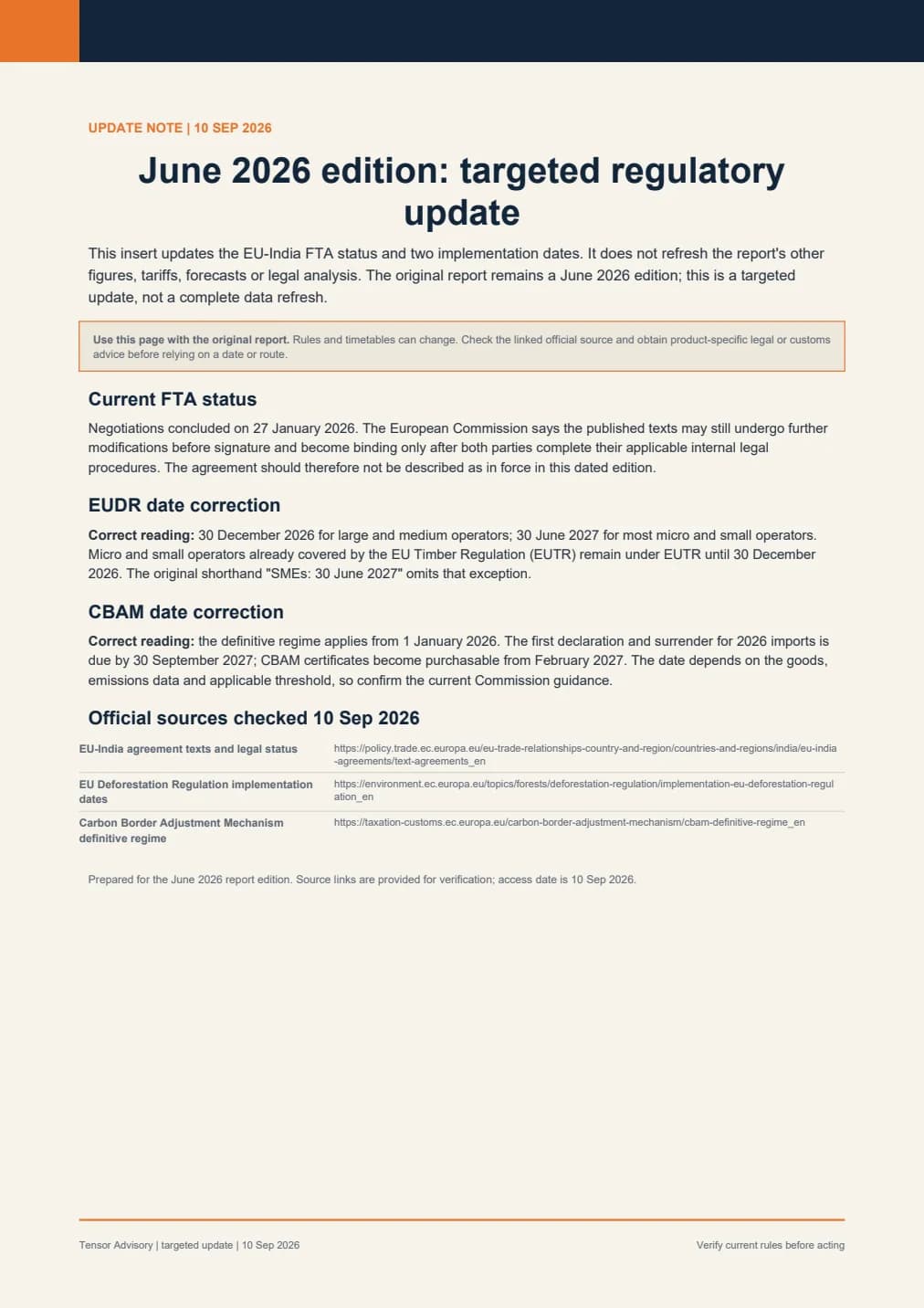
The published text may change before signature. It becomes binding only after both parties complete their applicable internal procedures. Future preferences should not be treated as today's tariff.
What is our landed cost under today's applicable duties, before any future FTA preference?
3The decision
Now the next question is specific.
Identify the product classification, current duties and possible origin requirements. Model the current route first, then test a separate future-agreement scenario against verified conditions.
Choose your market and objective. Take the outline with you, commission a custom MIR, or use it to start an advisory conversation.
Your working briefIndia
Europe → India / Market entry
Question to clarify
Decide how to enter the market through the Europe → India corridor.
Evidence to assemble
Entry conditions, demand signals, competitor shape, regulatory pathway, and the assumptions that need testing. Focus the source pass on Europe → India.
Working output
A go, wait, or narrow decision outline with the next validation step made explicit.